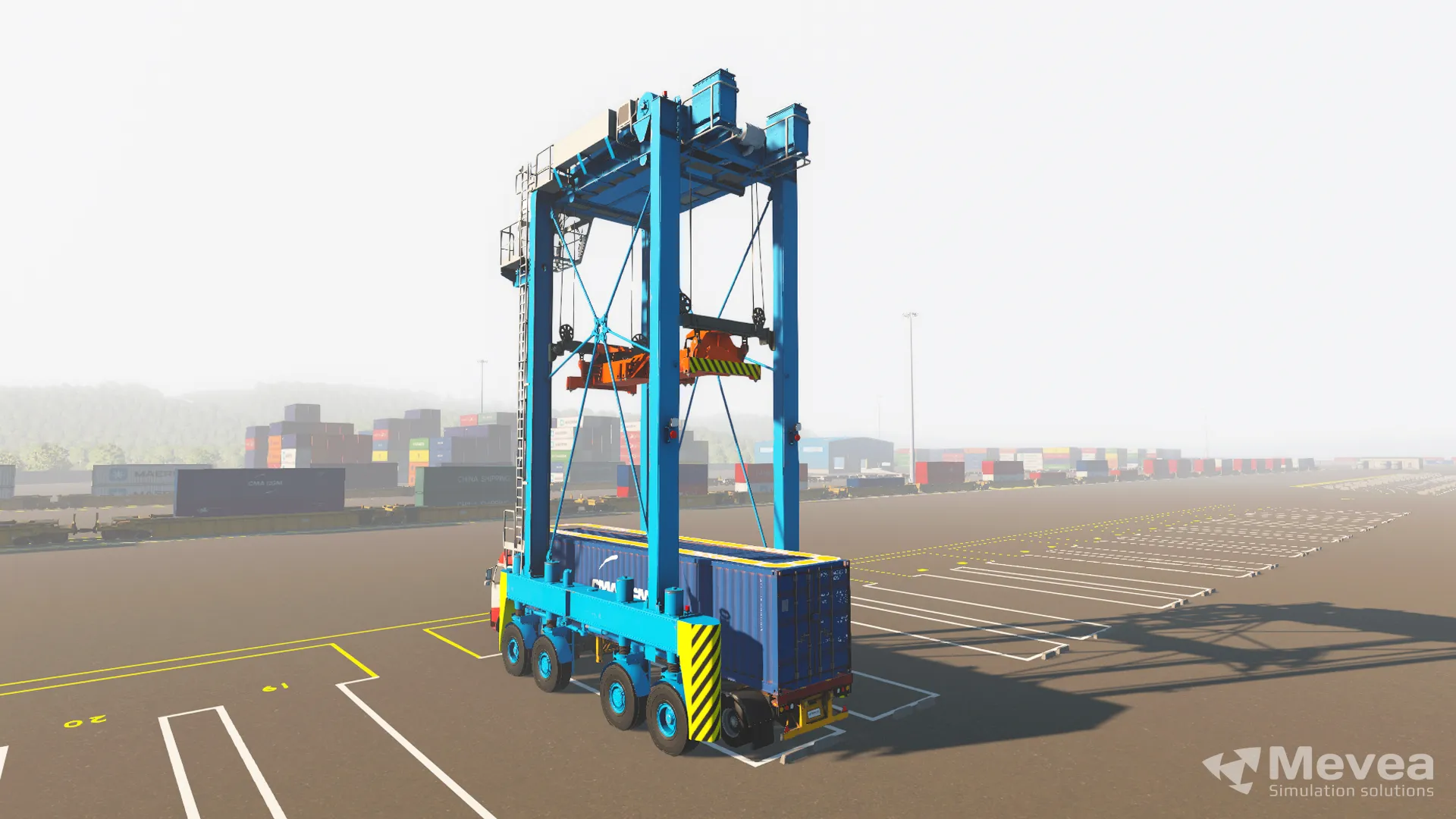
Simulator training significantly improves operational safety in port environments by providing risk-free learning opportunities for operators to master complex equipment and hazardous scenarios. Physics-based simulator technology creates realistic training environments in which operators develop critical skills without exposure to actual workplace hazards. This approach reduces accidents, builds operator confidence, and ensures comprehensive safety preparation before real-world operations.
What Exactly Is Simulator Training, and How Does It Work in Port Operations?
Simulator training uses advanced simulator technology to recreate real port equipment and operating conditions in a controlled virtual environment. These systems employ sophisticated physics engines that accurately simulate machinery behaviour, environmental factors, and the operational challenges operators face daily.
Mevea simulator solutions incorporate realistic motion feedback, multi-screen displays, and digital control interfaces that mirror actual equipment. The physics-based simulation responds to operator inputs exactly as real machinery would, including hydraulic responses, load dynamics, and environmental interactions. This creates an immersive learning environment in which operators can practise complex manoeuvres, emergency procedures, and routine operations without safety risks.
Port simulator training covers a wide range of heavy equipment training simulators applications, from reach stackers and RTG cranes to STS cranes and container handling equipment. The simulator approach ensures that every aspect of equipment behaviour is accurately represented, providing operators with genuine preparation for real-world challenges.
Why Do Traditional Training Methods Fall Short for Port Equipment Safety?
Traditional on-the-job training exposes new operators to significant safety risks while they learn on expensive, potentially dangerous equipment. Conventional training methods cannot safely replicate emergency situations, equipment malfunctions, or extreme operating conditions that operators must be prepared to handle.
Learning directly on real machinery creates several critical limitations. Trainees cannot practise dangerous scenarios without real risk, instructors cannot control environmental conditions to ensure consistent learning experiences, and equipment downtime for training reduces operational productivity. Additionally, the pressure of operating expensive machinery often prevents thorough exploration of equipment capabilities and limitations.
The gap between theoretical classroom knowledge and practical application becomes particularly problematic in port environments. Traditional methods struggle to bridge this divide, often leaving operators inadequately prepared for complex real-world situations that require split-second decision-making and precise equipment control.
How Do Motion Platform Simulators Reduce Workplace Accidents and Injuries?
Motion platform simulators allow operators to experience and respond to dangerous scenarios repeatedly without any safety risk. Realistic physics simulation enables trainees to develop proper reaction patterns, muscle memory, and decision-making skills for emergency situations before encountering them in actual operations.
The motion feedback provided by advanced simulators helps operators understand equipment dynamics and develop proper handling techniques. This physical simulation builds confidence and competence simultaneously, ensuring operators can respond appropriately when faced with equipment malfunctions, load shifts, or environmental challenges.
Emergency scenario training becomes possible through simulator training, allowing operators to practise responses to equipment failures, adverse weather conditions, and coordination challenges. This comprehensive preparation significantly reduces the likelihood of accidents caused by inexperience or improper responses to unexpected situations.
What Specific Safety Benefits Do Port and Crane Operators Gain From Simulator Training?
Port equipment simulators address unique safety challenges, including precise load handling, adapting to weather conditions, and complex coordination requirements involving multiple operators. Crane operator training through simulator training enables operators to practise critical skills such as load positioning, collision avoidance, and emergency-stop procedures without risking equipment damage or personnel injury.
Simulators recreate challenging port conditions such as wind effects on loads, vessel movement during loading operations, and coordination with ground personnel. Operators learn to manage these variables safely while maintaining operational efficiency. The training includes scenarios involving equipment malfunctions, allowing operators to learn proper shutdown procedures and emergency protocols.
Container handling operations require precise coordination among multiple operators and equipment types. Simulator training enables operators to practise these complex interactions, improving communication skills and situational awareness, both of which are essential for maintaining safety in busy terminal environments.
How Does Motion Platform Training Compare to Desktop Simulator Solutions?
Motion platform simulators provide realistic physical feedback and support muscle memory development through authentic equipment behaviour simulation. Physics-based simulation ensures that every control input, load response, and environmental interaction mirrors real equipment performance, creating immersive learning experiences with full physical sensations.
Motion platform feedback enhances operator learning by providing the physical sensations that accompany equipment operation. This tactile element helps operators understand equipment limitations, load dynamics, and proper operating techniques. The combination of visual, auditory, and physical feedback creates comprehensive training experiences that support advanced skill development.
Desktop simulators offer excellent value as cost-effective training solutions with easy deployment and small footprint requirements. These systems are suitable for classroom environments, basic training scenarios, and group training sessions. Desktop solutions provide effective preparation for fundamental operations and theoretical understanding of equipment behaviour.
Both training approaches enable scenarios that would be impossible or too dangerous to recreate with real equipment. Operators can experience equipment at maximum capacity, practise recovery from various failure modes, and develop skills for extreme operating conditions, significantly improving both safety and operational efficiency.
Mevea: Leading Innovation in Port Simulator Training
Mevea stands at the forefront of port simulator training technology, combining over 20 years of expertise in physics-based simulation with cutting-edge training solutions. Our comprehensive simulator training solutions have transformed safety protocols across port operations worldwide, from container handling and crane training to reach stacker and RTG operations.
Our team’s deep understanding of both port operations and advanced simulator technology enables us to create training environments that perfectly replicate real-world conditions while maintaining complete safety. Mevea’s simulator technology delivers unmatched realism, ensuring that operators receive the most effective preparation possible for their critical roles in port environments.
For port operators seeking to enhance operational safety through advanced simulator training, Mevea offers proven expertise in developing customised solutions that address specific cargo handling challenges. For more information about implementing simulator training solutions, please contact our sales team.
This content was generated with the help of AI and it may contain mistakes