Every minute your port equipment sits idle during training means lost revenue and reduced terminal capacity. But operator downtime isn’t just about those training hours — it’s about how that ripple effect spreads through your entire operation. When you pull experienced operators from production to mentor newcomers, or when critical equipment can’t run because it’s tied up in training, your terminal’s productivity takes a direct hit. This challenge gets even tougher during peak seasons, when you need every piece of equipment running at full capacity but also need to get new operators up to speed quickly.
What if you could train operators without ever taking equipment offline? Mevea’s advanced simulation solutions offer a completely new approach to operator training in port operations. When you implement smart strategies that separate learning from live production, your terminal can dramatically cut downtime while boosting both operator efficiency and safety standards.
1. The Hidden Cost of Operator Downtime in Terminals
To understand the real impact of operator downtime, you need to look way beyond the obvious training hours. When a Ship-to-Shore crane operator is still learning, every container move takes longer. This creates bottlenecks that cascade through your entire operation. Vessels wait longer at berth, truck queues grow, and your terminal’s reputation for efficiency takes a hit. The financial impact goes far beyond what you’re paying that trainee per hour.
Training periods are just one type of downtime. Skill gaps in your existing workforce can cost you just as much, especially when operators struggle with equipment they rarely use or face scenarios they haven’t seen before. The time it takes for an operator to become truly skilled on a Reach Stacker or RTG crane translates directly to months of reduced terminal productivity. Every fumbled container pick, hesitant maneuver, and extra positioning attempt adds seconds that multiply across hundreds of daily operations.
Port equipment downtime during training also creates scheduling headaches. You’re stuck choosing between hitting production targets and developing your workforce — a choice that shouldn’t exist in modern terminal operations. The ripple effects touch everything from throughput capacity to customer satisfaction, making operator downtime one of the biggest yet most overlooked drains on terminal performance.
2. Implement Simulation-Based Training Programs
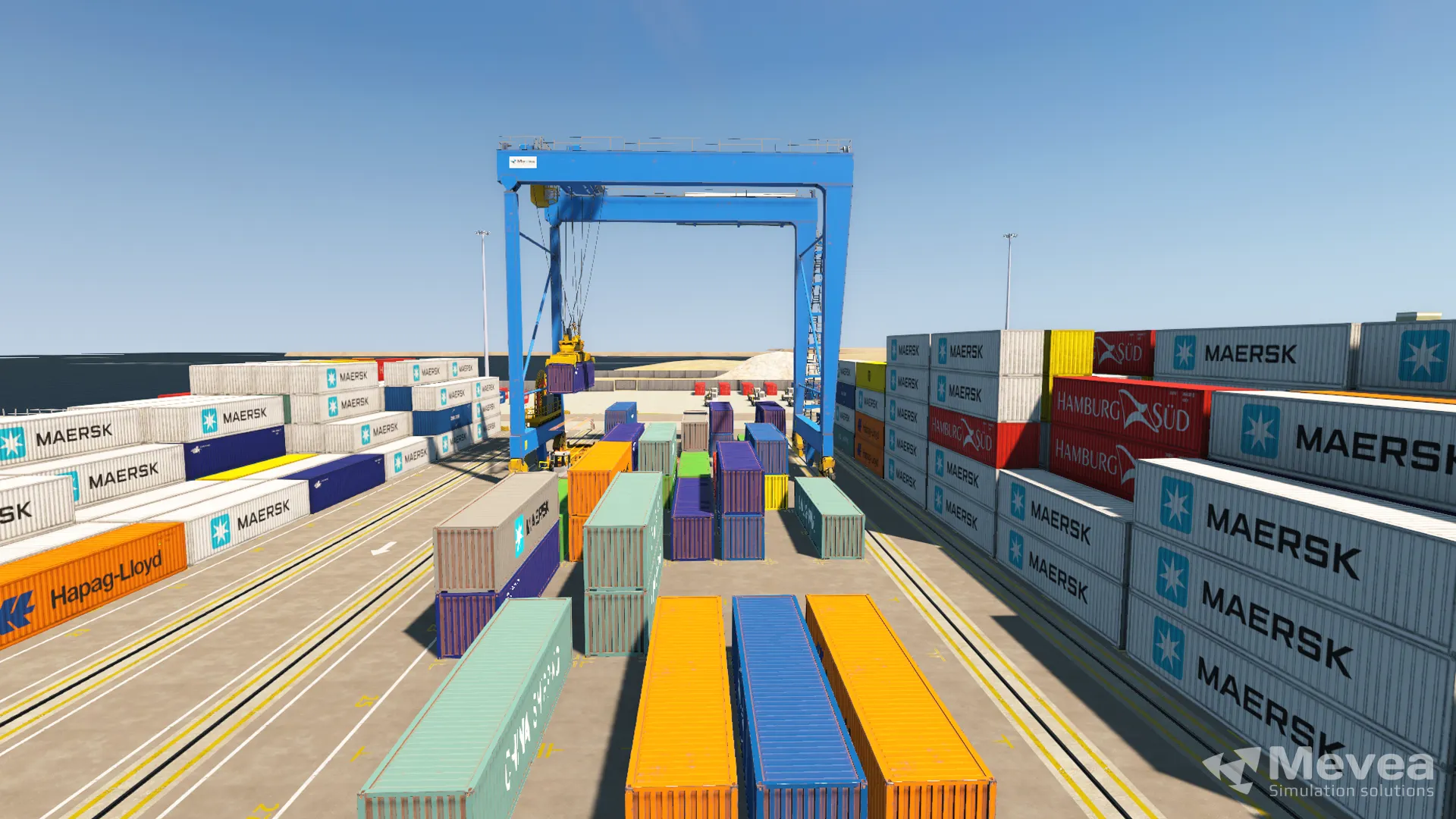
Simulation technology has completely changed how terminals can approach operator training without sacrificing production time. Physics-based simulators create digital twins of your actual port equipment, perfectly replicating the behavior, controls, and responses of Ship-to-Shore cranes, RTG cranes, Reach Stackers, and Internal Transfer Vehicles. Operators can practice complex container handling operations in virtual environments that feel remarkably close to the real thing, building muscle memory and decision-making skills without ever touching physical equipment.
What makes operator training simulators so powerful is how they can dramatically compress learning curves. A new operator can complete dozens of container moves in a single training session, encountering various scenarios and challenges that might take weeks to see in real-world operations. They can make mistakes, learn from them, and try again immediately — all without risking equipment damage or safety incidents. This accelerated learning means operators show up to their first real shift with confidence and skills that would traditionally take months to develop.
We’ve designed our training simulators for port equipment to deliver the most realistic simulation experience available, so skills developed in the virtual environment transfer seamlessly to actual operations. The reduction in equipment downtime is immediate — your physical assets stay in production while your training program runs in parallel, completely independent of operational demands.
3. Standardise Operator Certification Processes
When you create consistent, measurable training standards, you transform operator development from a subjective process into a data-driven system. Every operator has to demonstrate the same competencies before certification, which eliminates the variability that often drags out training periods unnecessarily. Clear benchmarks tell both trainers and trainees exactly what’s required, removing guesswork and helping operators reach proficiency faster.
Standardized certification protocols also give you objective proof of when an operator is genuinely ready for live equipment operation. Instead of relying on a supervisor’s gut feeling, you can point to specific performance metrics, error rates, and completion times that prove competency. This approach doesn’t just reduce downtime by preventing you from deploying underprepared operators too early — it also builds confidence throughout your workforce, since everyone knows they’ve met the same rigorous standards.
4. Practice Emergency Scenarios Safely
Real emergencies in port operations are thankfully rare, but when they happen, how your operators respond can mean the difference between a minor incident and a catastrophic failure. The problem is you can’t safely practice equipment failures, extreme weather responses, or hazardous situations using actual port equipment. The risks are simply too high, and deliberately creating dangerous scenarios would cost way too much.
Virtual training environments solve this impossible challenge by letting operators practice unlimited scenarios that would be dangerous or impossible to replicate safely. Operators can experience sudden equipment malfunctions, practice fire response procedures, or learn to handle containers in severe wind conditions — all without any real-world risk. This type of port crane operator training builds the instinctive responses that can prevent accidents when genuine emergencies arise, turning your operators into calm, capable professionals who’ve “seen it all” before they ever face a real crisis.
5. How Can You Measure and Track Operator Performance?
Data-driven performance monitoring transforms operator development from guesswork into a science. Modern training systems capture detailed metrics on every aspect of operator performance — from container positioning accuracy to cycle times, from fuel efficiency to error rates. These objective measurements show you exactly where each operator excels and where they need more practice, so you can personalize training programs and address skill gaps before they impact production.
The continuous feedback loop from performance tracking means you’re not just training operators once and hoping for the best. You can monitor ongoing operator efficiency, spot when refresher training is needed, and make sure your workforce maintains peak performance throughout their careers. This approach to measuring and improving operator capabilities happens entirely outside your production schedule, eliminating the downtime traditionally tied to performance assessments and remedial training.
6. Reduce Equipment Familiarisation Time
When your terminal invests in new equipment or upgrades existing machinery, the familiarization period typically means weeks or months of reduced productivity. Operators need time to learn new control systems, understand different handling characteristics, and build confidence with unfamiliar technology. This costly adaptation phase can significantly delay the return on your equipment investment.
Pre-training operators on digital replicas of new equipment before physical delivery completely eliminates this familiarization bottleneck. Your team can become skilled on the new Ship-to-Shore crane or updated RTG system months before it arrives at your terminal. When the actual equipment gets commissioned, your operators are already comfortable with the controls and ready to achieve full productivity from day one. This approach transforms equipment upgrades from disruptive transitions into seamless improvements in terminal productivity.
Turning Downtime into Competitive Advantage
The strategies we’ve explored represent a fundamental shift in how modern terminals approach operator development. When you separate training from production, standardize competency requirements, and leverage simulation technology, you transform operator training from a necessary resource drain into a strategic asset that strengthens your competitive position.
Reduced operator downtime translates directly into improved port efficiency, higher throughput capacity, and better financial performance. The safety improvements and cost savings are substantial, but perhaps the greatest advantage is the flexibility these approaches give you. You can scale training capacity to match seasonal demands, onboard new operators rapidly during growth periods, and maintain continuous skill development without ever compromising your operational schedule.
The question facing training managers in container terminal training today isn’t whether to modernize their approach, but how quickly they can implement these proven strategies. Mevea’s comprehensive training solutions can help your terminal eliminate operator downtime while building a more skilled, confident workforce. What would it mean for your terminal if operator downtime stopped being a constraint on your growth and productivity? Contact us to discuss your training needs.
This content was generated with the help of AI and it may contain mistakes