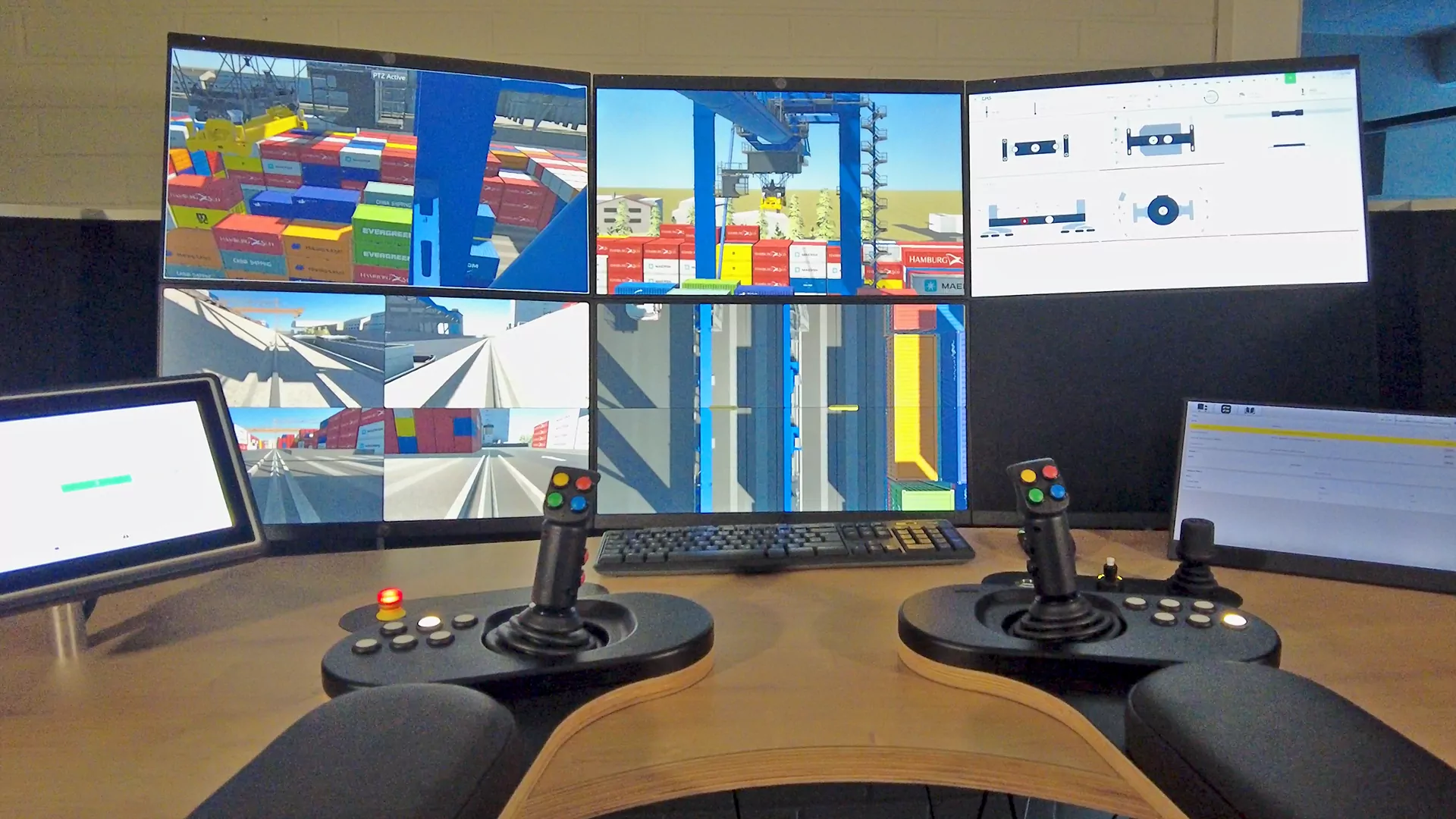
As ports and intermodal terminals continue to automate their operations, remote crane operations are becoming an increasingly important part of modern material handling environments. While Remote Operation Stations (ROS) improve operator comfort, operational flexibility, and efficiency, they also create new requirements for crane operator training and competency development.
Building the Künz ROS Trainer
To support a customer transitioning to remote crane operations, Künz decided to implement a dedicated training simulator for its Remote Operation Station (ROS) environment and selected Mevea as its simulator technology partner.
“After a thorough market evaluation of different simulator providers, Künz has chosen Mevea as its simulator partner. We selected Mevea because of its strong expertise in advanced training simulators and its comprehensive software portfolio, covering everything from the physics engine to training capabilities.”
Philipp Pasolli
R&D Team Lead, Künz
The resulting Künz ROS Trainer combines the actual Künz remote operation desk, crane control hardware, and crane control software with Mevea’s simulation and training technology. The solution also includes an Instructor Station that enables trainers to manage sessions, adapt scenarios in real time, and assess operator performance throughout the learning process.
Realistic Operator Training in a Safe Environment
Using the crane training simulator, operators train with the same interfaces and workflows they encounter in real operations. This helps reduce the learning curve when transitioning to live equipment while allowing operators to safely practice procedures and challenging situations without impacting production.
Simulator-based training also reduces the need to allocate production cranes for training purposes, improving equipment availability while reducing operational disruptions.
Additional benefits include:
- Improved safety
- Reduced equipment wear
- Lower energy consumption during training
- Faster operator readiness
- Long-term cost savings
As ports continue to invest in automation and remote operation technologies, effective operator training remains a critical success factor. The Künz ROS Trainer project demonstrates how simulator-based learning can support the transition to remote crane operations while improving safety, operational readiness, and workforce development.