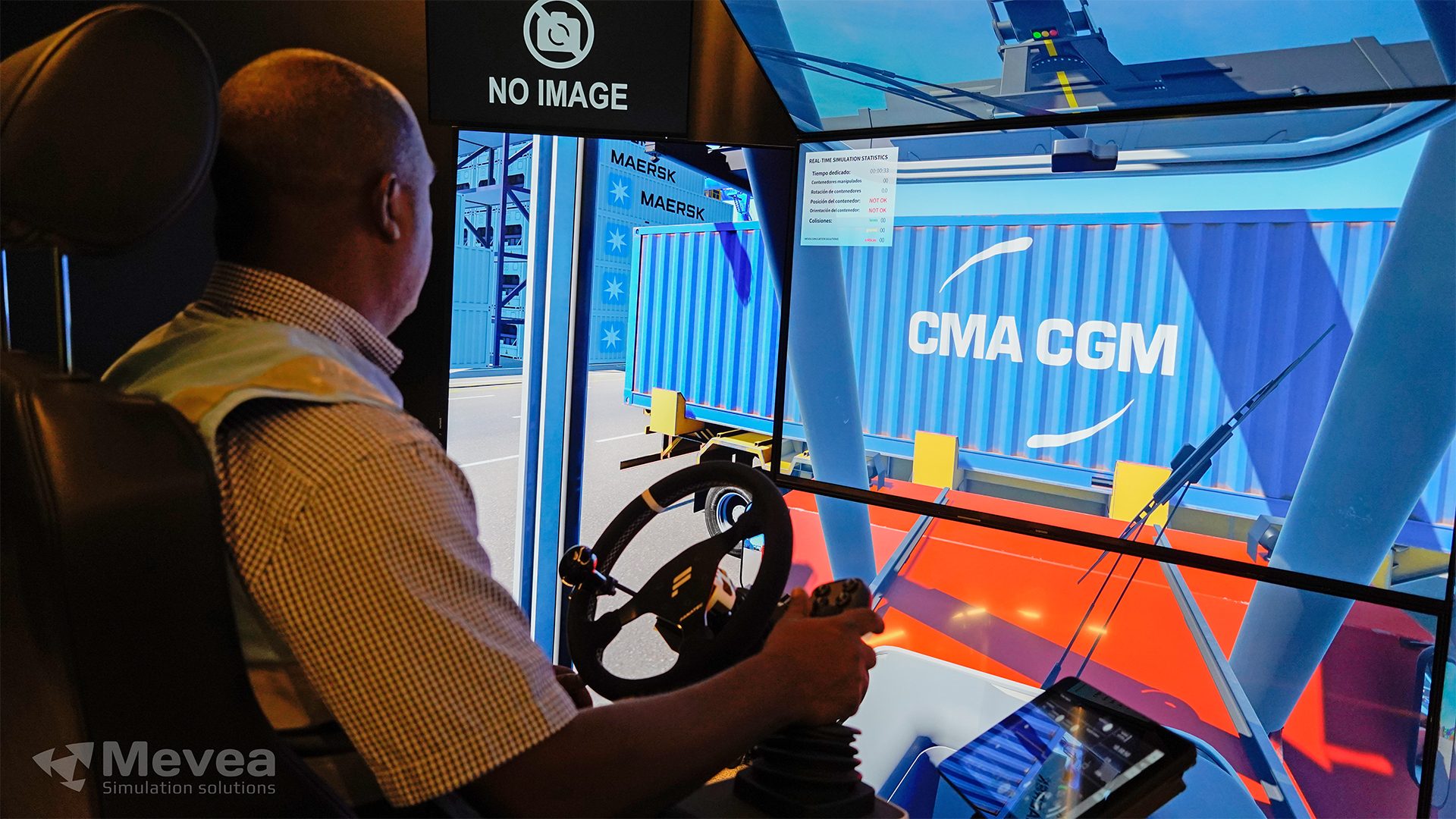
Container terminal operations demand precision, safety, and efficiency at every level. Yet many ports still rely on traditional training methods that expose new operators to significant risks while consuming valuable equipment time and resources. With crane operators handling loads worth millions and terminal downtime costing thousands per hour, the stakes for effective container terminal training have never been higher.
Modern ports are discovering that conventional on-the-job training approaches simply cannot meet today’s operational demands. From ship-to-shore cranes to rubber-tyred gantry systems, each piece of terminal equipment requires specialised skills that take months to develop through traditional methods. This comprehensive guide explores how advanced simulation technology is transforming port operator training, delivering safer, more efficient, and cost-effective learning outcomes.
You’ll discover why conventional training methods fall short, learn the essential components of effective operator development programmes, and understand how cutting-edge motion-based simulation and digital twin technology are revolutionising skills development in container terminals worldwide.
Why Traditional Container Terminal Training Falls Short
Traditional port operator training methods expose terminals to unnecessary risks and inefficiencies that modern operations can no longer afford. When new operators learn directly on expensive terminal equipment, every mistake carries the potential for costly damage, safety incidents, or operational delays. A single collision between a container and crane structure can result in repair costs exceeding $50,000, while equipment downtime during training sessions removes productive assets from revenue-generating operations.
The limitations extend beyond immediate safety concerns. Conventional training provides limited exposure to critical scenarios that operators must eventually master. Weather conditions, equipment malfunctions, and emergency procedures cannot be safely replicated during on-the-job training, leaving operators unprepared for real-world challenges. This gap in experience becomes particularly problematic when operators encounter their first severe weather event or equipment failure during actual operations.
Inconsistent skill development represents another significant challenge with traditional approaches. Different supervisors teach varying techniques, leading to operational inconsistencies across terminal teams. Some operators may receive comprehensive instruction while others learn through trial and error, creating uneven competency levels that affect overall terminal productivity. The lack of standardised training protocols makes it difficult to measure operator progress objectively or ensure all personnel meet required safety and efficiency benchmarks.
Furthermore, traditional training methods struggle to accommodate the complex scheduling demands of modern container terminals. Training sessions must compete with operational priorities, often resulting in rushed or incomplete instruction when ships arrive ahead of schedule or equipment is urgently needed elsewhere.
Essential Components of Effective Port Operator Training
Comprehensive port safety training programmes must address multiple competency areas to prepare operators for the demanding environment of modern container terminals. Equipment-specific skills form the foundation, with operators requiring detailed knowledge of ship-to-shore cranes, rubber-tyred gantry systems, reach stackers, and mobile harbour cranes. Each machine type demands unique operational techniques, safety protocols, and maintenance awareness that cannot be adequately covered through generic training approaches.
Safety protocols represent the most critical training component, encompassing everything from pre-operational inspections to emergency response procedures. Operators must master proper load-handling techniques, understand weight distribution principles, and recognise potential hazard indicators before they escalate into dangerous situations. Container handling training must include comprehensive coverage of twistlock operations, container inspection procedures, and proper stacking techniques to prevent costly damage and ensure operational safety.
| Training Component | Key Skills | Assessment Method |
|---|---|---|
| Equipment Operation | Machine controls, load positioning, efficiency metrics | Performance monitoring, moves-per-hour tracking |
| Safety Protocols | Risk assessment, emergency procedures, incident prevention | Scenario-based testing, safety score calculations |
| Weather Adaptation | Wind compensation, visibility management, operational limits | Simulated-condition exercises, decision-making evaluation |
Weather condition handling requires specific attention in terminal operator development. High winds, reduced visibility, and adverse conditions significantly impact crane operations and container handling procedures. Operators must understand when to cease operations, how to secure equipment safely, and the proper techniques for working in challenging environmental conditions. This knowledge proves essential for maintaining both safety standards and operational continuity during adverse weather events.
How Motion-Based Simulation Transforms Learning Outcomes
Motion platform simulators revolutionise operator training by providing realistic physical feedback that desktop systems cannot match. When operators feel the subtle vibrations of load pickup, the resistance of joystick controls, and the motion dynamics of equipment operation, they develop crucial muscle memory and spatial awareness that transfer directly to real-world performance. This tactile learning component proves essential for mastering the nuanced control techniques required for efficient container handling.
Physics-based training environments recreate the authentic behaviour of terminal equipment with remarkable precision. Advanced heavy equipment training simulators accurately model hydraulic system responses, load dynamics, and environmental factors that affect equipment performance. Operators experience realistic scenarios including container sway, wind resistance, and equipment inertia, preparing them for the complex physics they’ll encounter during actual operations. This comprehensive simulation approach enables trainees to practice challenging manouvers repeatedly without risking equipment damage or safety incidents.
“Simulator-trained operators can perform more moves per hour due to better learning, leading to increased revenue while minimising the risk of physical harm to people or property.”
The controlled, repeatable nature of simulation-based training allows instructors to create progressive learning experiences tailored to individual operator needs. Trainees can master basic operations before advancing to complex scenarios involving multiple containers, tight spaces, or challenging weather conditions. Crane simulator training platforms enable operators to practise disaster scenarios and emergency procedures that would be impossible to recreate safely with actual equipment, ensuring comprehensive preparation for all operational situations.
Motion-based simulators also provide immediate performance feedback, allowing operators to understand the consequences of their actions in real time. This instant feedback loop accelerates skill development and helps operators recognise and correct inefficient techniques before they become ingrained habits.
What Makes Digital Twin Technology Essential for Training?
Digital twin training technology enables creation of precise virtual replicas of actual terminal equipment, allowing operators to train on exact representations of the machines they’ll operate. Real-time physics engines calculate accurate responses to operator inputs, environmental conditions, and load dynamics, providing training experiences that mirror real-world equipment behaviour down to the smallest detail. This precision ensures that skills developed in simulation transfer seamlessly to actual operations.
Mevea training software captures and analyses comprehensive performance data throughout training exercises. Instructors can monitor crane movements, joystick inputs, collision incidents, and safety-related activities, generating detailed reports that identify specific areas for improvement. Mevea’s enhanced report system calculates performance scores based on predefined criteria including productivity metrics, safety compliance, and operational quality, providing objective assessments of operator competency levels.
The flexibility of Mevea’s simulation solutions allows training programmes to be configured according to specific terminal layouts, crane configurations, and operational procedures. Customised scenarios can incorporate actual container ship profiles, terminal marking systems, and local operational protocols, ensuring operators train in environments that precisely match their future workplace conditions. This customisation capability proves particularly valuable for terminals with unique layouts or specialised equipment configurations.
Data-driven insights from digital twin training systems support long-term operator development and performance optimisation. Terminal equipment training programmes can track individual progress over time, identify common skill gaps across operator groups, and adjust curricula based on real performance data. This analytical approach enables continuous improvement in training effectiveness while providing terminal managers with objective metrics for operator certification and performance evaluation.
Modern simulation technology represents a fundamental shift in how container terminals approach operator training, offering unprecedented levels of safety, efficiency, and skill development. By embracing these advanced training methodologies, terminals can reduce operational risks, improve productivity, and ensure their operators are fully prepared for the demands of modern port operations. To learn more about implementing these solutions in your terminal, contact our experts for a consultation.
This content was generated with the help of AI and it may contain mistakes