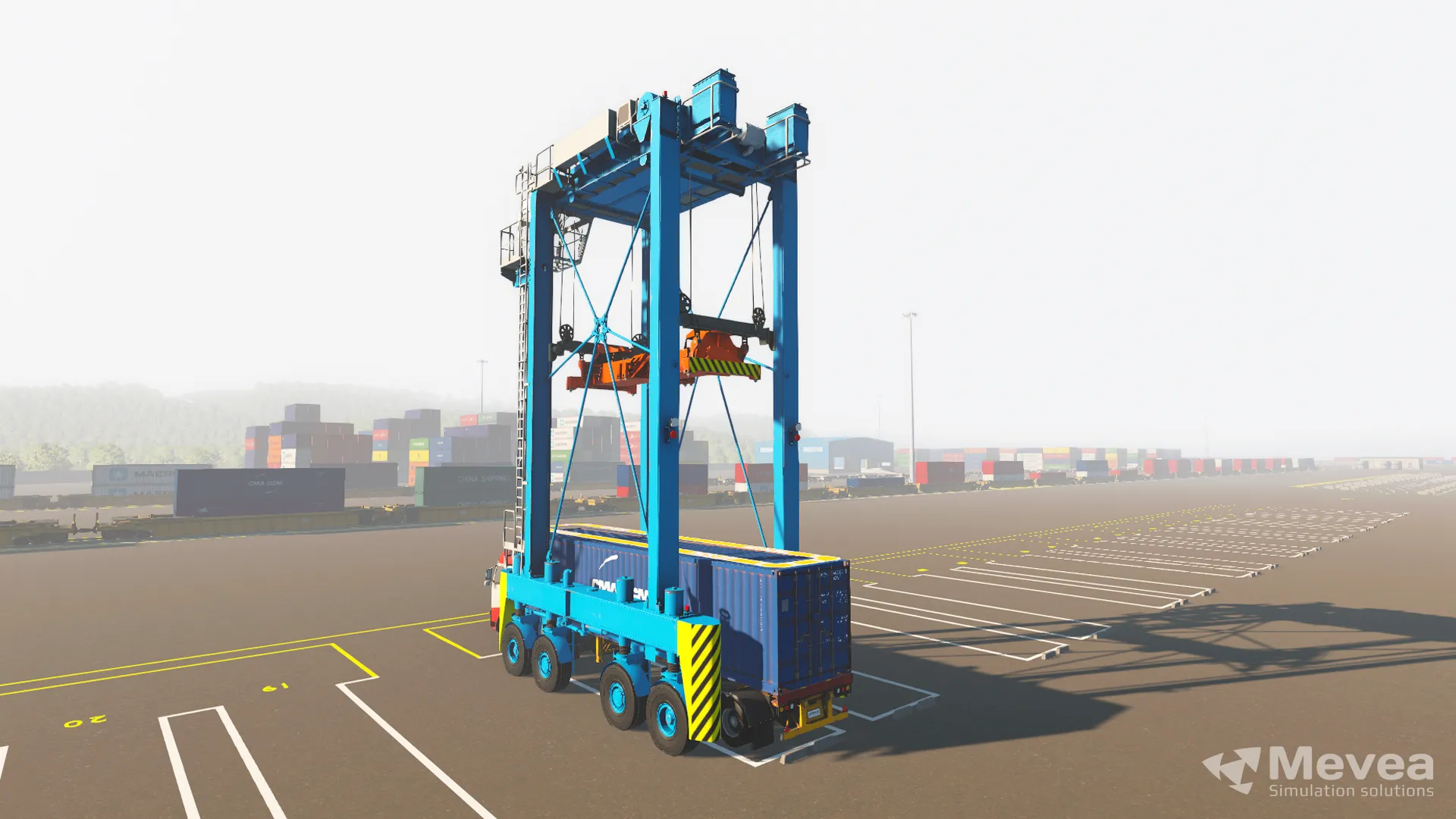
Simulator training helps ports scale operator capacity quickly and without operational risk by allowing new hires to complete structured training programmes on virtual equipment before they ever touch a real machine. This approach significantly compresses the learning curve, keeps live equipment in productive use, and removes the safety hazards associated with learning on the job in a busy terminal environment. The questions below unpack exactly how this works in practice.
How quickly can new port operators become productive with simulator training?
New port operators trained on simulators typically reach productive performance levels faster than those trained exclusively on live equipment. Because simulator training removes downtime caused by waiting for equipment availability, weather holds, or low-traffic periods, trainees accumulate focused operating hours far more quickly. The structured progression from basic manoeuvres to complex load-handling scenarios also means skill development is deliberate rather than incidental.
In a traditional on-the-job training model, a new operator might spend weeks observing before handling equipment independently. With simulator-based training, that same operator can practise hundreds of repetitions of the same movement, in varying conditions, within the first days of training. By the time they step into a real machine, muscle memory and decision-making patterns are already established.
The result is that ports running structured simulator programmes tend to see new hires contributing to throughput targets sooner, which directly supports workforce scaling goals without creating a bottleneck at the training stage.
What types of port equipment can be trained on a simulator?
Modern port equipment simulators cover the full range of terminal machinery, from large fixed cranes to mobile handling equipment. The breadth of equipment that can be simulated means a port can standardise its entire training programme around a single simulator platform rather than managing separate approaches for each machine type.
Our port simulator solutions support training on the following equipment categories:
- Ship-to-Shore (STS) cranes
- Rubber Tyred Gantry (RTG) cranes
- Rail Mounted Gantry (RMG) cranes
- Mobile Harbour Cranes (MHC)
- Offshore cranes
- Reach stackers
- Empty container handlers
- Straddle carriers
- Terminal tractors and forklifts
Each simulator replicates the specific controls, load dynamics, and operating environment of the real machine. Trainees can practise in realistic harbour environments, across different weather and visibility conditions, and with scenarios that reflect the actual challenges they will face on the job.
How do simulators eliminate risk during port operator training?
Simulators eliminate training risk by moving the learning process into a virtual environment where mistakes have no physical consequences. A trainee can drop a container, misjudge a swing, or lose situational awareness during a manoeuvre, and the only outcome is a learning moment, not an incident report or equipment repair bill.
Port terminals are inherently high-risk environments. Heavy loads, tight clearances, vessel movements, and ground crews working nearby create conditions where an inexperienced operator poses a genuine hazard to people and infrastructure. Conventional training on live equipment either restricts what trainees can practise or accepts elevated risk as part of the process.
Simulator training removes that trade-off entirely. Trainees can be exposed to emergency scenarios, equipment fault conditions, and unusual load configurations that would never be deliberately recreated on a real machine. This means they arrive at their first live operating session having already encountered and responded to the kinds of situations that cause incidents in the field.
Can simulator-trained operators match the performance of traditionally trained operators?
Yes. Simulator-trained operators consistently match and, in many cases, outperform operators trained solely through traditional on-the-job methods. The reason is straightforward: simulators provide more deliberate practice, more consistent feedback, and more exposure to edge cases than live training can realistically deliver.
Operators who complete structured simulator programmes before moving to live equipment tend to demonstrate better load control, smoother cycle times, and fewer handling errors from their first shifts. Because the heavy equipment training simulators accurately replicates the behaviour of real machinery, including the dynamics of suspended loads, hydraulic response, and equipment inertia, the skills transfer directly rather than requiring significant adjustment.
Ports that have integrated simulator training into their training pipelines report that simulator-trained operators achieve higher moves-per-hour rates earlier in their tenure. This is not simply a matter of familiarity with controls; it reflects genuine operational competence built through high-repetition, structured practice.
What simulator hardware options are available for port training programmes?
Port training programmes can choose from several simulator hardware configurations depending on their training objectives, available space, and budget. The right choice depends on whether the priority is broad access across multiple trainees, high-fidelity immersion for advanced skills, or mobility for training across multiple sites.
We offer three core hardware tiers for port operator training:
- Mevea Desktop is a compact, portable simulator suited to classroom environments and introductory training. It is cost-effective, easy to deploy, and requires minimal footprint. Multiple trainees can access it concurrently without requiring dedicated simulator rooms, making it well suited to group training and foundational skill development.
- Mevea Pro is a professional-grade simulator solution with a three-degree-of-freedom motion platform and between three and ten screens. It delivers realistic physical feedback that supports muscle memory development, making it well suited to intermediate and advanced skills training.
- Mevea Master King is a full-scale cab simulator built for maximum immersion. It replicates the actual operating environment of the target machine and provides the closest experience to working on the real equipment, supporting the highest level of operator readiness.
All hardware configurations include the Mevea Instructor Station, which gives training supervisors real-time visibility of trainee performance, the ability to introduce scenario variables during a session, and detailed post-session reporting for structured feedback.
How do ports measure the ROI of simulator-based operator training?
Ports measure the return on investment from simulator training across four main areas: reduced training costs, faster operator productivity, fewer equipment incidents, and lower fuel and maintenance expenditure during training. Together, these factors typically make a compelling financial case even before the safety and environmental benefits are factored in.
On the cost side, simulator training significantly reduces the use of live equipment, fuel, and instructor time compared to traditional methods. Every hour a crane or reach stacker spends in training is an hour it is not contributing to terminal throughput. Shifting that training to a simulator frees the real equipment for productive work.
On the revenue side, faster time-to-productivity means new operators start contributing to moves-per-hour targets sooner. For ports scaling their workforce to meet growing container volumes, this acceleration has a direct impact on capacity. Fewer handling incidents also reduce the cost of repairs, cargo damage claims, and unplanned downtime.
Environmental considerations are increasingly part of ROI calculations as well. Simulator training reduces CO2 emissions by minimising the use of diesel-powered equipment during training, which supports sustainability reporting and, in some jurisdictions, has direct cost implications through carbon pricing. When ports account for all of these factors together, the investment in a harbour crane simulator programme typically delivers returns well beyond the initial capital outlay.
Ready to scale your port operator training programme?
Whether you are looking to onboard new operators faster, reduce training-related risk, or build a long-term workforce development strategy, Mevea’s port simulator solutions are designed to meet the demands of modern terminal operations. Our sales team is ready to help you identify the right hardware configuration, discuss integration with your existing training workflows, and walk you through the expected return on investment for your specific operation.
Contact the Mevea sales team today to discuss your port training requirements and find out how simulator-based training can support your capacity goals.
This content was generated with the help of AI and it may contain mistakes