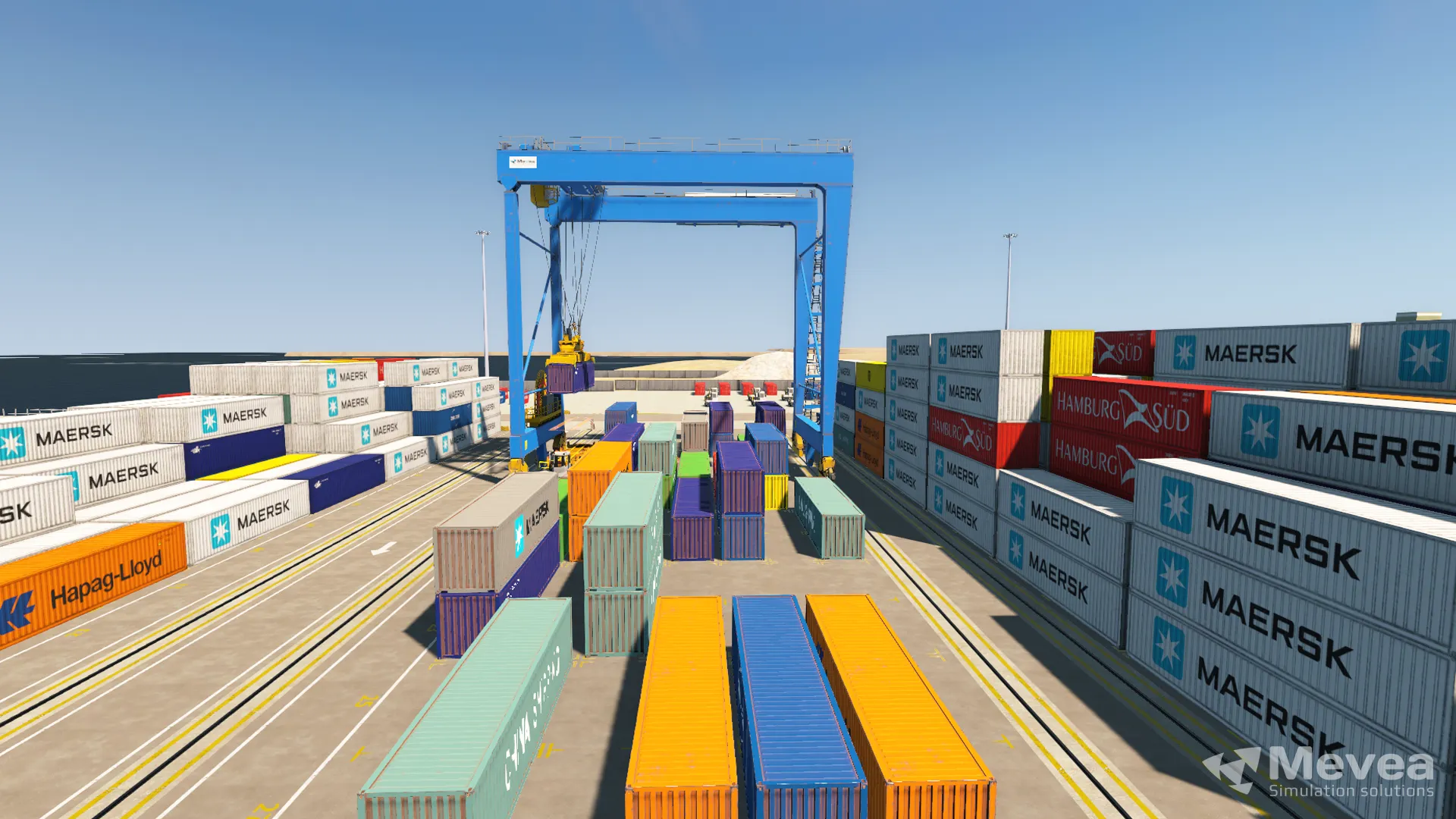
The maritime industry stands at a critical crossroads where traditional training methods struggle to meet the demands of modern port operations. With container throughput reaching unprecedented levels and crane operator training becoming increasingly complex, port facilities worldwide are discovering that conventional on-equipment training simply cannot deliver the safety, efficiency, and cost-effectiveness required in today’s competitive landscape.
This shift towards advanced training methodologies isn’t just about keeping pace with technology—it’s about fundamentally reimagining how we prepare operators for the sophisticated equipment that drives global trade. From physics-based simulator technology to motion platform systems, the future of maritime training is being shaped by innovations that promise safer, more effective, and remarkably realistic learning experiences. Understanding these developments is crucial for training managers, port operators, and maritime professionals who want to build world-class competency programmes that deliver measurable results.
Why Traditional Crane Training Methods Fall Short
Conventional on-equipment training in maritime environments presents significant challenges that limit both effectiveness and operational efficiency. When trainees learn directly on port cranes, facilities face substantial equipment downtime costs that can reach thousands of dollars per day, removing critical assets from revenue-generating operations during peak shipping periods.
Safety risks represent another fundamental limitation of traditional approaches. New operators learning on live equipment in busy port environments are exposed to potentially dangerous scenarios, including container-handling mishaps, collision risks, and equipment malfunctions. These safety concerns often result in overly cautious training programmes that fail to expose operators to the full range of challenging conditions they’ll encounter in real operations.
Environmental constraints further restrict the effectiveness of traditional training. Weather conditions, seasonal variations, and operational schedules limit when comprehensive training can occur. Trainees may complete certification without experiencing night operations, adverse-weather handling, or emergency procedures—gaps that become apparent only when operators face these situations independently.
Perhaps most critically, conventional methods provide limited exposure to scenarios. Training on actual equipment confines instructors to relatively safe, predictable situations, preventing operators from developing the skills needed for complex load handling, equipment failures, or high-pressure operational demands that define modern maritime safety training requirements.
The Evolution of Physics-Based Simulator Technology
Advanced physics engines have revolutionised training capabilities by creating virtual environments that accurately replicate the complex dynamics of crane operations. Modern physics-based simulation systems calculate real-time forces, load behaviours, and equipment responses with unprecedented accuracy, enabling trainees to experience authentic operational challenges without real-world risks.
Advanced simulator technology represents the pinnacle of this evolution, creating virtual replicas of actual port equipment that mirror every mechanical characteristic, hydraulic response, and operational parameter of their physical counterparts. These systems enable training scenarios that would be impossible or prohibitively expensive to recreate with traditional methods, from extreme weather conditions to complex multi-crane coordination exercises.
Real-time simulation accuracy has reached a level at which operators experience authentic feedback from every control input, load movement, and environmental factor. Motion platform integration enhances this realism by providing physical sensations that match visual and auditory cues, creating immersive training environments that engage multiple learning pathways simultaneously.
The integration of advanced physics engines with motion platform technology has created training environments that deliver authentic operational experiences while maintaining complete safety and control over learning scenarios.
These innovations enable port crane simulation systems that can replicate specific port layouts, equipment configurations, and operational procedures, allowing operators to train on virtual versions of the exact equipment and environments where they’ll work.
Comparing Training Simulator Options
When evaluating simulator training solutions, port operators can choose between desktop simulators and motion platform systems, each offering distinct advantages for different training requirements and operational contexts.
Desktop simulators provide cost-effective training solutions with easy deployment capabilities and small footprint requirements. These systems excel in classroom environments and basic training scenarios, enabling group training sessions and fundamental skill development. Their accessibility makes them ideal for initial operator familiarisation and procedural training, while their affordability allows broader deployment across training facilities.
Motion platform simulators incorporate three to six degrees of freedom of movement, recreating the subtle motions, vibrations, and physical feedback operators experience in actual crane operations. These systems provide realistic physical feedback that supports muscle memory development and advanced skill acquisition, making them particularly valuable for comprehensive operator training programmes.
| Training Approach | Key Strengths | Skill Development Speed | Operational Readiness |
|---|---|---|---|
| Desktop Simulators | Cost-effective, easy deployment | Efficient for basics | Strong foundational skills |
| Motion Platform Systems | Physical feedback, muscle memory | Accelerated | Advanced operational skills |
Haptic feedback through motion platforms engages physical learning pathways that static simulators cannot access. When operators feel the resistance of heavy loads, the sway of containers, or the response of hydraulic systems, they develop spatial awareness and intuitive understanding of equipment behaviour that enhances both safety and productivity in actual operations.
The enhanced muscle-memory development achieved through motion platform training creates more confident, capable operators who transition smoothly from simulator to real equipment operation, reducing the learning curve and improving overall crane training technology effectiveness.
Measuring Training Effectiveness in Simulator Environments
Effective measurement of training outcomes requires comprehensive frameworks that track both quantitative performance metrics and qualitative skill-development indicators. Modern heavy equipment training simulators provide detailed analytics on operator performance, including precision metrics, reaction times, and decision-making patterns that would be difficult to capture in traditional training environments.
Performance metrics in simulator training encompass multiple dimensions: load-handling accuracy, operational efficiency, safety-protocol adherence, and emergency-response capabilities. These measurements provide objective data that instructors can use to identify specific areas requiring additional focus and to track improvement over time.
Competency assessment methods in simulator environments enable standardised evaluation procedures that ensure consistent training outcomes across different operators and training sessions. Training software records every aspect of performance, creating comprehensive skill profiles that support certification decisions and ongoing professional development planning.
Data-driven training approaches leverage this wealth of performance information to optimise learning pathways for individual operators. By analysing patterns in skill acquisition and identifying common challenge areas, training programmes can adapt to maximise effectiveness while reducing time to competency for new operators.
Advanced simulator platforms enable instructors to create specific scenarios designed to test particular skills, measure improvement, and validate competency levels before operators transition to real equipment, ensuring that port equipment training delivers measurable, reliable results.
Building Comprehensive Crane Training Programmes
Strategic implementation of simulator training requires careful integration with existing maritime training standards and certification requirements. Comprehensive programmes combine the safety and flexibility of simulator training with the practical experience of supervised real-equipment operation, creating learning pathways that maximise both skill development and operational readiness.
Progressive skill development through simulator training enables structured learning that builds complexity gradually. Operators begin with basic control familiarisation in simple scenarios before advancing to complex multi-crane operations, emergency procedures, and challenging environmental conditions. This systematic approach ensures solid foundational skills while building confidence through manageable progression.
Scenario-based learning is a cornerstone of effective simulator training programmes. By creating specific operational challenges that mirror real-world conditions, training programmes can expose operators to situations they might rarely encounter in traditional training but must be able to handle competently in actual operations.
Integration with existing maritime safety training standards ensures that simulator training programmes meet regulatory requirements while providing enhanced learning experiences. Modern simulator systems can incorporate specific port procedures, safety protocols, and operational standards, creating customised training environments that reflect actual working conditions.
We’ve found that the most effective programmes combine comprehensive simulator training with structured competency frameworks, creating training experiences that deliver both the safety benefits of virtual learning and the practical skills required for confident real-world operation. This integrated approach represents the future of professional crane-operator development in maritime environments. For more information about implementing advanced simulator training programmes in your facility, please contact our sales team.
Mevea: Leading the Future of Maritime Simulator Training
As the maritime industry continues to evolve towards more sophisticated training methodologies, Mevea stands at the forefront of this transformation. With over 20 years of expertise in developing cutting-edge simulator technology, Mevea has established itself as a trusted partner for ports and training facilities worldwide seeking to implement world-class crane operator training programmes.
Our comprehensive understanding of physics-based simulator technology, combined with our advanced Mevea simulator solutions, enables us to deliver training systems that exceed industry standards. Mevea simulator solutions incorporate real-time physics engines and advanced simulator technology that provide unparalleled realism and training effectiveness. Our expertise extends beyond technology to include programme development, competency frameworks, and ongoing support that ensures successful implementation and measurable training outcomes.
From initial consultation through programme deployment and beyond, Mevea’s sales team brings deep industry knowledge and technical excellence to every project. We understand the unique challenges facing maritime training professionals and have the proven expertise to deliver solutions that enhance safety, reduce costs, and improve operational readiness across all levels of crane operator training.
This content was generated with the help of AI and it may contain mistakes